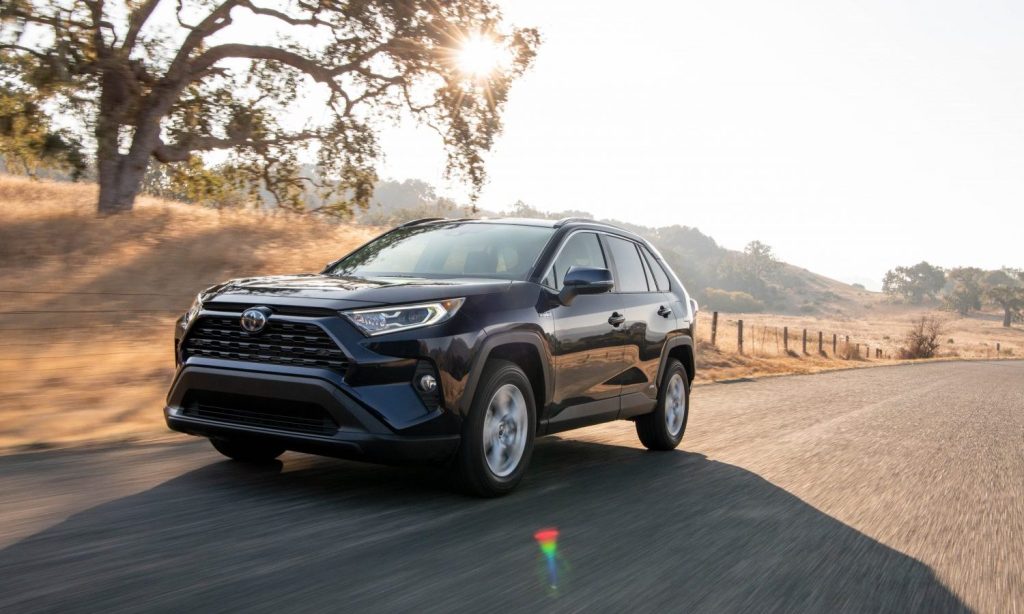
Earlier this week, while bored out of my mind, I made my way over to Lexus’ website, clicked on “vehicles,” and pressed the “build and price” option under their NX model. I was then greeted with six different options of the exact same car that ranged from roughly $39,000, all the way up to nearly $50,000. I have to be honest with you all, I didn’t see the point. While thinking of a way that anybody in their right mind would want to sit down and figure out all six trim models, I suddenly remembered that Lexus sells the NX in both battery-electric and plug-in electric versions. To make a long story short, in the entire NX lineup, there are 12 different trims you can select from. There are more versions of the NX than there are provinces in Canada

Lexus’ three different versions of the NX, each with four trims
This, unfortunately, is not an isolated trend. The RX, the next largest crossover, had 10 different trims. Again, 10 versions of the same car. Granted, half of them were hybrids, but still, 10 versions of essentially the same car. Upon putting this on my Instagram story, I got a direct message telling me to look at what the rest of Toyotas lineups were like, so I did. My jaw hit the floor when I saw that there are 13 different RAV4s, 12 different types of Highlanders, 8 different 4Runners, two turtledoves, and a partridge in a goddamn pear tree. There is absolutely no reason there should be this many different trims of a car. The weirdest part is, that crossovers like the Corolla Cross and CH-R have only three versions. So, why Toyota? Why make it so difficult.
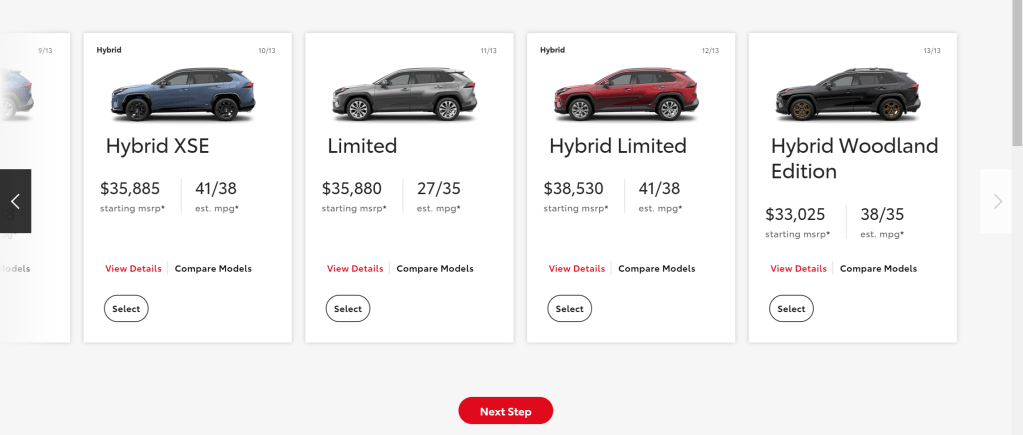
Four out of the 13 trims for the RAV4 seen here
I would like to acknowledge that one of the reasons why manufacturers do this is to give consumers a choice. Obviously, nobody wants to walk into a Toyota dealership and only have one or two of a car available, especially if one is a bare-bones nothing model, and the other is a fully loaded one. Not everybody wants a fully-loaded car, I get that, and thankfully Toyota realizes that with cars like the Corolla Cross. You can have a base model, a mid-tier model, or the top-tier model. But why can’t you adopt that system throughout your whole range? I get the hybrid aspect of it as well. You should be able to have that same trim in a hybrid variant, but when the combined sum of your model numbers is higher than Rob Ford was while in office, you start to confuse consumers. Again, I get that customers want to have the choice and ability to pick out their perfectly tailored car, trust me, I am the same way, but throwing a bakers-dozen number of choices at me, I’m probably going to get overwhelmed and want to go home. Put it this way: if you tell me that we’re going out to lunch and that I can choose Chiptole, Qdoba, Bonchon, Noodles & Company, or CAVA, I’ll spend the rest of the day thinking about every minute detail and end up pissing myself off in the process. I’d rather be given a third of those options and have better control over what I want.
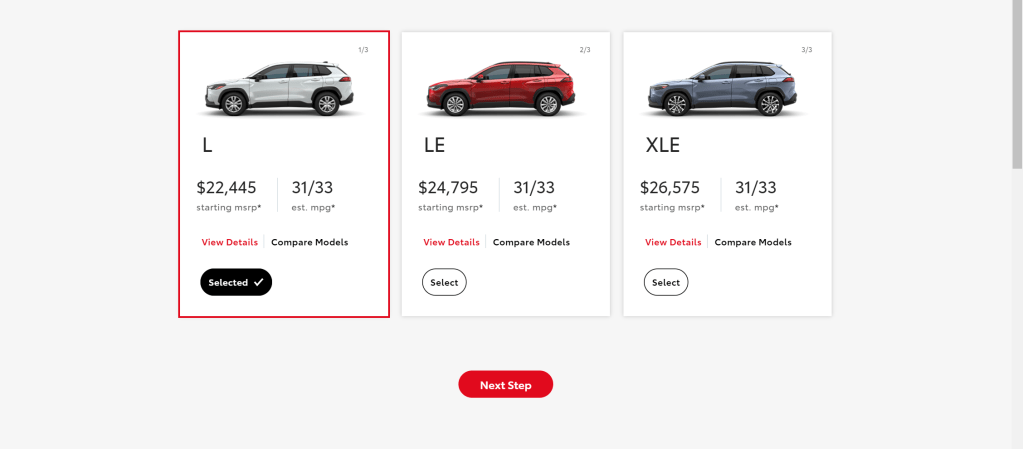
The three simple trims for the Corolla Cross
Toyota, we both know you can make an uncomplicated lineup. LE, XE, XLE. By the way, this isn’t just Toyota as well, Nissan does the same thing, but Toyota, if you can make a lineup streamlined in half your range, do it for the rest. Yes, I am aware that the 4Runner might need some extra trims because it is an off-road vehicle, and that might be the only exception. So, before I leave this half rant, I’ll leave you with how it should be done. Three models, a base, a mid, and a top. Don’t overcomplicate it.


 Zander Drives Cars
Leave a comment